



The National Institute of Health (NIH) has issued winter health advisories urging federal and provincial health departments, hospitals and laboratories to strengthen disease surveillance, immunisation and hospital readiness.
Three areas of concern
- Winter smog and the precautions people should take
- Seasonal influenza prevention and control for 2026–27
- Vaccine-preventable diseases: measles, diphtheria, whooping cough (pertussis) and tetanus
The NIH’s Center for Disease Control warned that falling temperatures and shifting disease patterns could raise respiratory and cardiovascular risks.
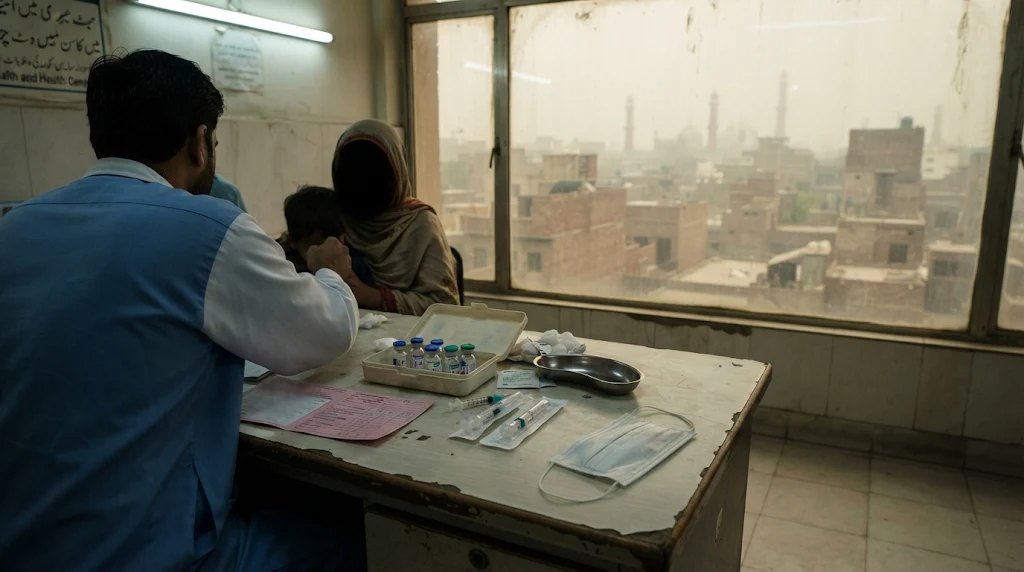
Diphtheria patients are being treated at the Pakistan Institute of Medical Sciences (PIMS) in Islamabad, and whooping cough cases have been detected in Islamabad and Rawalpindi. Doctors have also raised alarm over child deaths linked to measles and low vaccination coverage, along with vaccine misinformation on social media.
What families can do
- Check that children’s routine vaccines are up to date at the nearest EPI centre
- Consider a flu shot for elderly relatives and people with chronic illness
- Wear a mask on smoggy days and see a doctor for high fever, breathing difficulty or a persistent cough